
What “Movement Matters™” Means
As a kid in the 80’s most of our play was outdoors, and a lot of that involved some kind of ball. Tennis, cricket (remember I’m from South Africa and cricket is a thing there), soccer, rugby, basketball, volleyball, squash (also a thing), and golf. I can remember taking a tennis ball and throwing it against the front wall of our house and then trying to catch it in different ways: two hands, right hand, left hand, after spinning around, letting it bounce, throwing it hard as could, lobbing it gently, going for 100 catches in a row… The options were endless.
Looking back on those experiences, I don’t remember anyone teaching my shoulders how to move when I went to catch that tennis ball as it bounced off the wall back at me. I don’t remember anyone teaching me where my eyes should be when I was hitting a tennis ball, or how to keep my balance when I dribbled a soccer ball. I do remember getting some pointers about how to hold or angle a tennis racquet if I wanted the ball to spin certain ways, or how to use my hands to play a delicate shot when I was batting in a cricket match. But on the whole the way my body moved in each of these activities was rather instinctive because my movement was a reaction to a moving ball. And I was pretty good at hitting, throwing, kicking, etc.
And then there was/is golf.
The ball isn’t moving, it’s just sitting there waiting to be hit. How can your body react to a ball in an athletic way when the ball is not moving? And when you get ready to hit a golf ball you are standing still, both feet on the ground, and now you have to ACT because you cannot REACT. You have to CREATE movement rather than letting your movement be a response.
And that, almost universally for anyone learning or playing golf, is a problem. Solving that problem is part of the wonder of the game. And, it’s what I’ve built my teaching philosophy around.
Movement Matters™ is my approach to teaching golf. Movement Matters is a reminder that inside each of us are instinctive patterns of movement. Have you ever watched little children hit or throw something? I’m talking about really young kids, perhaps just barely able to walk, yet they can launch their pacifier over three or four church pews during the middle of a sermon. Never had a throwing lesson. So how can they do it?
Movement Matters looks to tap into and apply our instinctive ways of moving to how we hit a golf ball.
A few things Movement Matters is and isn't:
It's a real-time, 3-dimensional look at your specific movement patterns. Using motion measurement, I can immediately see how you move and where your opportunities for optimization are.
It's not a checklist of swing positions. Not an opinion. Not a preference.
It uses movement data from the best players in the world as a basis for understanding cause and effect.
It gives me, your coach, and you, my student, the precise movement priorities you need to reach your goals.
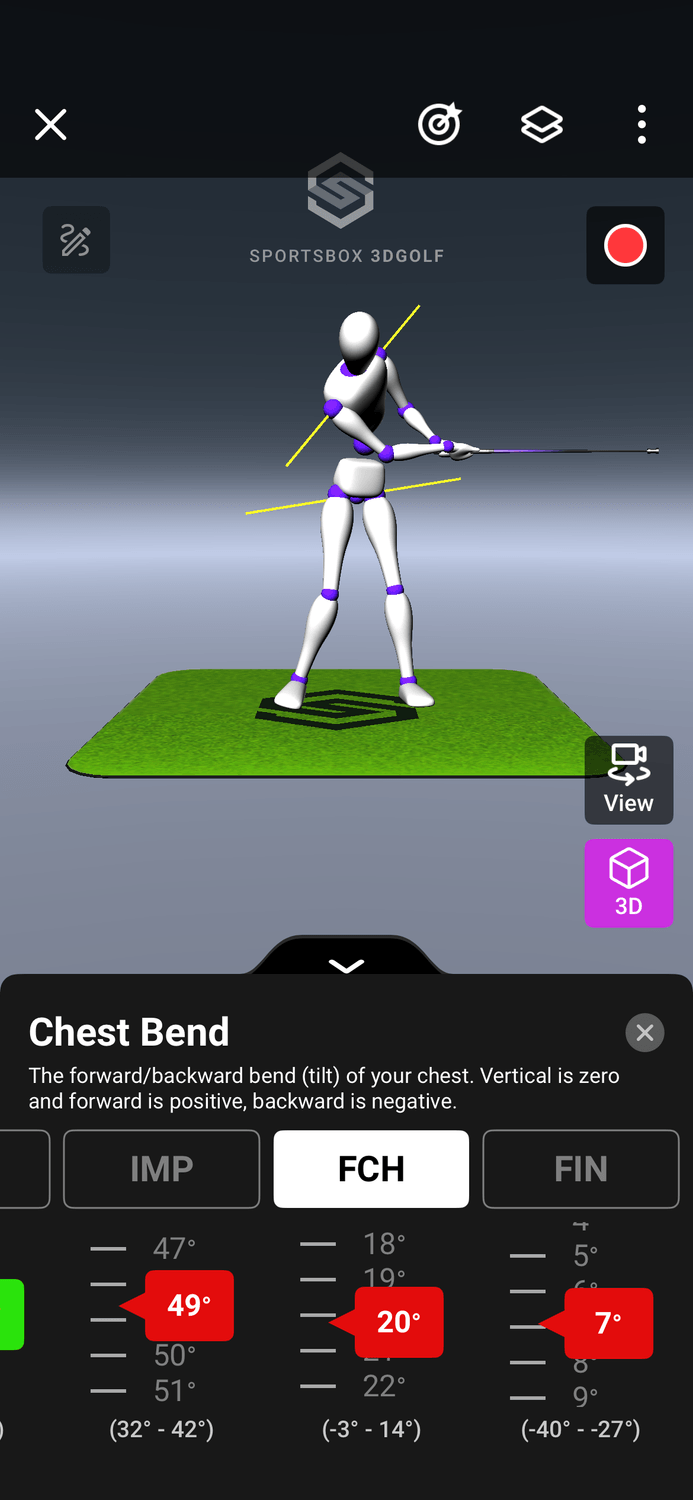
I have used 3-D motion measurement tools for 11 years to immediately identify the movement priority for every student.
I have used 3-D motion measurement tools for 11 years to immediately identify the movement priority for every student.
Are you new to golf, or a struggling golfer? You need to plug into the Movement Matters framework. Are you a solid player who's hit a plateau? You need it too.
If you missed it, I shared last week why I got into teaching in the first place; Movement Matters is the 'how' behind that 'why.
Visit movementmatters.golf to learn how to get your Movement Matters analysis and personalized improvement priorities.